

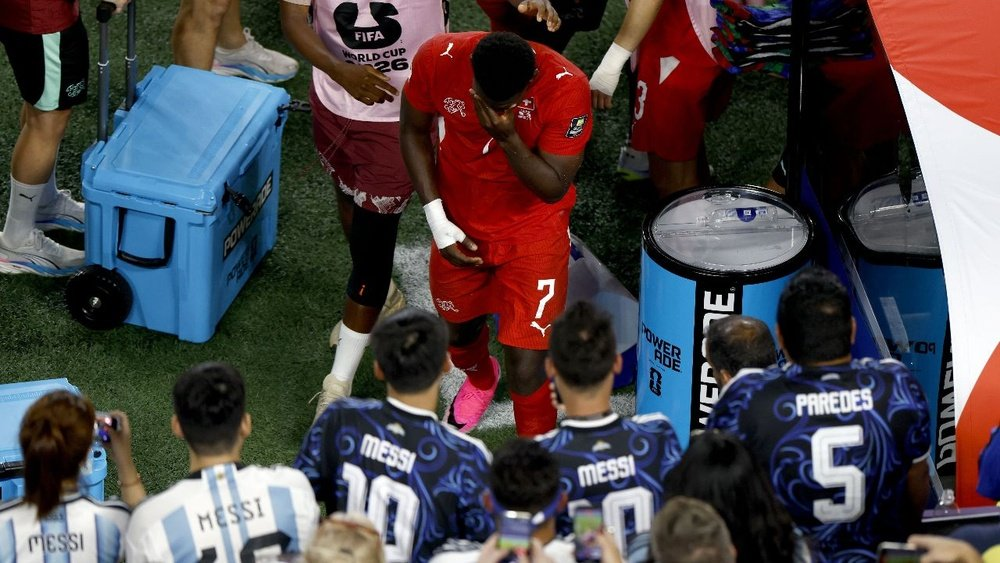
The IFAB has clarified VAR protocols following the 2026 World Cup, confirming that Breel Embolo was incorrectly dismissed during Argentina’s 3-1 victory over Switzerland after referee Joao Pinheiro overstepped his authority.
The 2026 World Cup encounter between Argentina and Switzerland was defined by the contentious dismissal of Breel Embolo. Match official Joao Pinheiro was alerted by VAR to a potential simulation by the Swiss forward, shortly after he had brandished a yellow card to Leandro Paredes. Following a pitchside review, the referee rescinded the midfielder’s booking and instead issued Embolo a second yellow card, sending him for an early bath. However, the IFAB has now released a statement admitting to a fundamental officiating error.
Under the governing body’s strict protocols, “a yellow card—other than a second yellow card—can only be reviewed to identify the player who committed the offence; the offence itself cannot be reviewed or modified”. As a result, VAR lacked the jurisdiction to recommend a change in the nature of the infraction to penalise a dive, meaning the Swiss talisman should never have been sent off.
Breel Embolo’s dismissal is the latest in a series of controversial calls involving Argentina during the 2026 World Cup, further intensifying the scrutiny of VAR protocols. The IFAB statement emphasised that, under current regulations, such an intervention was strictly prohibited at the time it hamstrung Switzerland.
The tournament has been marred by other flashpoints, including the “Las Malvinas son argentinas” banner displayed after the ‘Albiceleste’ secured their spot in the final. Despite FIFA regulations explicitly forbidding political messages or references to conflict, Gianni Infantino opted against sanctioning the players involved. With this latest ruling, the IFAB has effectively cast a spotlight on officiating standards and questioned the level of support provided by football’s highest authority during the 2026 World Cup.