

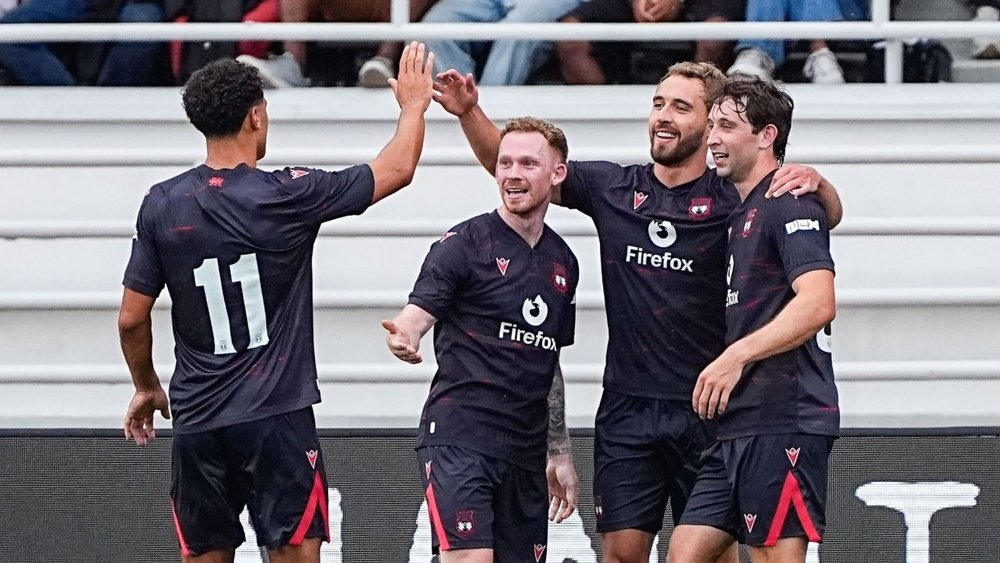
Wrexham will take on Sunderland on 3 August in their fifth and final pre-season friendly, as they continue their build-up to the new campaign. Phil Parkinson’s side are also preparing for their first-round EFL Cup tie against Middlesbrough after a summer which has included impressive results against Premier League opposition.
Wrexham will face Sunderland on 2 August in what will be their fifth and final pre-season friendly of the summer. The fixture will bring an end to a demanding preparation schedule ahead of the new campaign.
Last season, Wrexham fell just short of the long-awaited promotion to the Premier League, finishing seventh in the table. They ended the campaign behind Hull City, who eventually secured a place in the English top flight.
This summer began with a goalless draw against Wisla Krakow before a series of difficult tests against Premier League opposition. Wrexham beat Manchester United 1-0 thanks to a goal from Sam Smith and then overcame Leeds United 3-2.
Their only defeat of the summer came against Liverpool, managed by Andoni Iraola, in a 1-0 loss. They will now look to finish pre-season positively before turning their attention to the first round of the EFL Cup against Middlesbrough.
Wrexham Football Club’s history
Founded in 1864, Wrexham Association Football Club boasts of being the third-oldest professional club in the world. Throughout its history, the Welsh team has played memorable matches, such as the FA Cup victory against Arsenal in the early 1990s. In addition, the team became a local legend thanks to its 23 Welsh Cup titles, a record it still holds today.
The Racecourse Ground, considered the oldest active football stadium in the world, has not only witnessed historic goals but also moments that celebrate the club’s identity and resilience. Despite years in lower divisions, the spirit of Wrexham never faded.
Ryan Reynolds and Rob McElhenney: the Hollywood owners who changed the course of history
In 2021, the club’s history changed radically with the arrival of actors Ryan Reynolds and Rob McElhenney, who acquired Wrexham AFC for £2 million.
Reynolds once said: “We didn’t just buy a football club, we became part of a community.” That vision has guided both of their management: investment in infrastructure, strategic signings and global marketing that put the Welsh club on the world map.